Debug (line 243 of ViewableData.php): PageController created with a failover class of Page

Debug (line 243 of ViewableData.php): SilverStripe\Assets\Storage\DBFile created with a failover class of SilverStripe\Assets\Image

Debug (line 243 of ViewableData.php): DNADesign\Elemental\Controllers\ElementController created with a failover class of A2nt\ElementalBasics\Elements\SliderElement

Debug (line 243 of ViewableData.php): DNADesign\Elemental\Controllers\ElementController created with a failover class of DNADesign\Elemental\Models\ElementContent

Debug (line 243 of ViewableData.php): DNADesign\Elemental\Controllers\ElementController created with a failover class of A2nt\ElementalBasics\Elements\AccordionElement

Debug (line 243 of ViewableData.php): DNADesign\Elemental\Controllers\ElementController created with a failover class of DNADesign\ElementalList\Model\ElementList

Debug (line 243 of ViewableData.php): SilverStripe\Assets\Storage\DBFile created with a failover class of SilverStripe\Assets\Image

Debug (line 243 of ViewableData.php): DNADesign\Elemental\Controllers\ElementController created with a failover class of Site\Elements\BlockElement

Debug (line 243 of ViewableData.php): DNADesign\Elemental\Controllers\ElementController created with a failover class of Site\Elements\BlockElement

Debug (line 243 of ViewableData.php): DNADesign\Elemental\Controllers\ElementController created with a failover class of Site\Elements\BlockElement

Debug (line 243 of ViewableData.php): DNADesign\Elemental\Controllers\ElementController created with a failover class of Site\Elements\BlockElement

Debug (line 243 of ViewableData.php): DNADesign\Elemental\Controllers\ElementController created with a failover class of Site\Elements\BlockElement

Debug (line 243 of ViewableData.php): DNADesign\Elemental\Controllers\ElementController created with a failover class of Site\Elements\CTAElement

Debug (line 243 of ViewableData.php): DNADesign\Elemental\Controllers\ElementController created with a failover class of Site\Elements\CTAElement

Debug (line 243 of ViewableData.php): DNADesign\Elemental\Controllers\ElementController created with a failover class of Site\Elements\CTAElement

Debug (line 243 of ViewableData.php): DNADesign\Elemental\Controllers\ElementController created with a failover class of Site\Elements\CTAElement

Debug (line 243 of ViewableData.php): DNADesign\Elemental\Controllers\ElementController created with a failover class of Site\Elements\CTAElement

Debug (line 243 of ViewableData.php): DNADesign\Elemental\Controllers\ElementController created with a failover class of Site\Elements\CTAElement

Debug (line 243 of ViewableData.php): DNADesign\Elemental\Controllers\ElementController created with a failover class of Site\Elements\CTAElement

Debug (line 243 of ViewableData.php): DNADesign\Elemental\Controllers\ElementController created with a failover class of Site\Elements\CTAElement

Debug (line 243 of ViewableData.php): DNADesign\Elemental\Controllers\ElementController created with a failover class of Site\Elements\CTAElement

Debug (line 243 of ViewableData.php): SilverStripe\Assets\Storage\DBFile created with a failover class of SilverStripe\Assets\Image

Debug (line 243 of ViewableData.php): SilverStripe\Assets\Storage\DBFile created with a failover class of SilverStripe\Assets\Image

Debug (line 243 of ViewableData.php): SilverStripe\Assets\Storage\DBFile created with a failover class of SilverStripe\Assets\Image

Debug (line 243 of ViewableData.php): SilverStripe\Assets\Storage\DBFile created with a failover class of SilverStripe\Assets\Image

Debug (line 243 of ViewableData.php): SilverStripe\Assets\Storage\DBFile created with a failover class of SilverStripe\Assets\Image

Debug (line 243 of ViewableData.php): SilverStripe\Assets\Storage\DBFile created with a failover class of SilverStripe\Assets\Image

Debug (line 243 of ViewableData.php): SilverStripe\Assets\Storage\DBFile created with a failover class of SilverStripe\Assets\Image

Debug (line 243 of ViewableData.php): SilverStripe\Assets\Storage\DBFile created with a failover class of SilverStripe\Assets\Image

Debug (line 243 of ViewableData.php): SilverStripe\Assets\Storage\DBFile created with a failover class of SilverStripe\Assets\Image

Debug (line 243 of ViewableData.php): SilverStripe\Assets\Storage\DBFile created with a failover class of SilverStripe\Assets\Image

Debug (line 243 of ViewableData.php): SilverStripe\Assets\Storage\DBFile created with a failover class of SilverStripe\Assets\Image

Debug (line 243 of ViewableData.php): SilverStripe\Assets\Storage\DBFile created with a failover class of SilverStripe\Assets\Image

Debug (line 243 of ViewableData.php): HomePageController created with a failover class of HomePageStyle2

Debug (line 243 of ViewableData.php): SilverStripe\Assets\Storage\DBFile created with a failover class of SilverStripe\Assets\Image

Debug (line 243 of ViewableData.php): SilverStripe\Assets\Storage\DBFile created with a failover class of SilverStripe\Assets\Image

Debug (line 243 of ViewableData.php): SilverStripe\Assets\Storage\DBFile created with a failover class of SilverStripe\Assets\Image

Debug (line 243 of ViewableData.php): SilverStripe\Assets\Storage\DBFile created with a failover class of SilverStripe\Assets\Image

Debug (line 243 of ViewableData.php): SilverStripe\Assets\Storage\DBFile created with a failover class of SilverStripe\Assets\Image

Clinical Trials - Research
New Upstate Research Strategic Plan Learn More

Clinical Trials

Search Research Website

Clinical Trials

  • Clinical Trials Office
The Clinical Trials Office (CTO) supports SUNY Upstate Medical University as a resource for investigators, research coordinators, and the community.  CTO works to make the clinical trials process more efficient while growing the research program here at SUNY Upstate Medical University.

The CTO supports investigators and coordinators by reviewing, negotiating, signing, and performing certain administrative functions regarding agreements with external industry sponsors for the funding and conduct of clinical trials. These include:

  • Clinical Trial Management System (CTMS)
  • Confidential Disclosure Agreements (CDA)
  • Non-Disclosure Agreements (NDA)
  • Clinical Trial Agreements (CTA)
  • Coverage Analysis (CA)
  • Research budgets

CTO negotiates its research agreements to be consistent with academic standards and university policies, and applicable federal and state laws, and regulations.

The CTO also provides education to the research community and support to CRAs.

List of currently active clinical trials

A Clinical Trials Management System (CTMS) is specialized software used by research institutions, hospitals, pharmaceutical companies, and contract research organizations (CROs) to plan, manage, and track clinical trials from start to finish.

CTO utilizes a comprehensive CTMS system called Velos eResearch to manage our clinical trials.  Please contact the CTO via email (ClinicalTrialsOffice@upstate.edu) for help accessing Velos. 

Training for Velos is provided by the CTO. 


Upon receipt of a Confidential Disclosure Agreement (CDA) — also known as a Non-Disclosure Agreement (NDA) — CTO conducts a legal and administrative review to ensure the terms align with institutional policies, protect its interests, and allow for proper collaboration or information exchange.

Here's how a CDA/NDA is generally reviewed:

1. Initial Submission & Routing

  • A CRA submits the CDA to the CTO for review via a short form in Velos.  This form collects information necessary for CTO to conduct its review. 

(For more information on our Clinical Trials Management System (CTMS), see the tab above.)

2. Document Review

CTO conducts a review which includes the following key elements:

  • Confirm that the correct legal entity of the institution is named.
  • Ensure the purpose of the disclosure is clearly stated and consistent with institutional goals.
  • Establishes definition and the scope of the confidential information including ensuring definitions are not overly broad and if documents will be marked confidential.
  • Confirm what the institution is agreeing not to do (e.g., disclose, misuse).
  • Ensuring the obligations are reasonable and enforceable.
  • Duration of the agreement and confidentiality obligations should be clear and limited (often 3–5 years).  Evergreen or non-terminating agreements are generally not accepted.
  • Permanent or excessively long confidentiality periods may be rejected or renegotiated.
  • Verify permitted disclosures if any.  May include information required to be disclosed by law or court order. Information already known or independently developed or publicly available information.
  • Ensure the CDA does not assign or obligate future IP ownership.
  • Information should be used solely for the defined purpose (i.e.  no unauthorized research or publication).
  • Terms regarding what happens to confidential information after the project ends.  Confirm the information is returned or destroyed.

3. Negotiation (if necessary)

  • If the terms are not acceptable, the CTO will propose edits (aka redlines) directly to the sponsor.
  • Legal teams from both parties may be involved if necessary to negotiate acceptable language.

4. Final Approval & Signatures

  • Once finalized, authorized institutional signatories (not individual researchers) sign the CDA.
  • The agreement is then returned to the other party for countersignature.

5. Recordkeeping & Implementation

  • The signed CDA is stored in institutional records.
  • The covered individuals (e.g., researchers) are notified of their obligations under the CDA.

Reviewing a Clinical Trial Agreement (CTA) is a complex and multidisciplinary process that involves legal, financial, regulatory, and operational components. The CTO follows a structured review process to protect the interests of the institution, to comply with regulations, and to ensure a smooth trial setup.

Here's how a CTA is generally reviewed:

1. Intake & Initial Assessment

  • The initial CTA is submitted by the Principal Investigator (PI) or the CRA to the CTO via the CTMS. 
  • The CTA typically includes the protocol, budget, and sponsor contact info.

 2. Contractual Review Conducted

  • Confirm correct legal names of parties included.
  • Ensure CTA aligns with protocol and study purpose.
  • Ensure proper definitions of who is responsible for medical care and compensation if a participant is injured.  Ensure the sponsor covers injury-related costs not due to institutional negligence.
  • Verify indemnity for the institution and PI against claims arising from the study drug/device.
  • Confirm adequate liability insurance for the sponsor and institution.
  • Ensure confidentiality clauses are present to protect proprietary information but not restrict publication or access to medical records.
  • Ensure the right to publish findings.
  • Clarify ownership of any inventions arising from the trial.

A Coverage Analysis (CA) is conducted to determine which clinical trial costs are billable to insurance (or Medicare) and which must be covered by the sponsor or institution. This is a regulatory and financial compliance process that ensures proper billing, prevents fraud, and supports budgeting for clinical trials involving patient care.

Review the below to help anticipate if your study will be required to have an CA conducted.  The final determination of whether a CA is required will be coordinated by CTO.

  • NO CA Required:
    • All protocol required clinical services will be paid for by study sponsor
    • Research study involves protocol required clinical services and all services are billable to patients or health insurance (no sponsor payment)
    • Research study is retrospective data collection or data coordinating only
  • CA Required:
    • Protocol required clinical services provided for research purposes will be paid for by sponsors. All other protocol required clinical services will be billed to patient or health insurance carrier


Here’s how a CA is generally conducted:

  • Documents submitted to the CTO via the CTMS. CTO coordinates the review of the CA at the same time as the budget. 
  • Once the review is complete CTO is informed and routes the documents to the hospital finance department for review.

Research Budget Review

The budget review is managed by the CTO in conjunction with research departments, contractors and hospital finance.  They check:

  • Per-subject costs (visits, procedures, labs).
  • Payment schedule and milestones.
  • Startup fees, screen failures, retention bonuses.
  • Overhead or facilities and administrative (F&A) cost rate.
  • Invoicing and payment terms.

Meet a Researcher

For More Information...

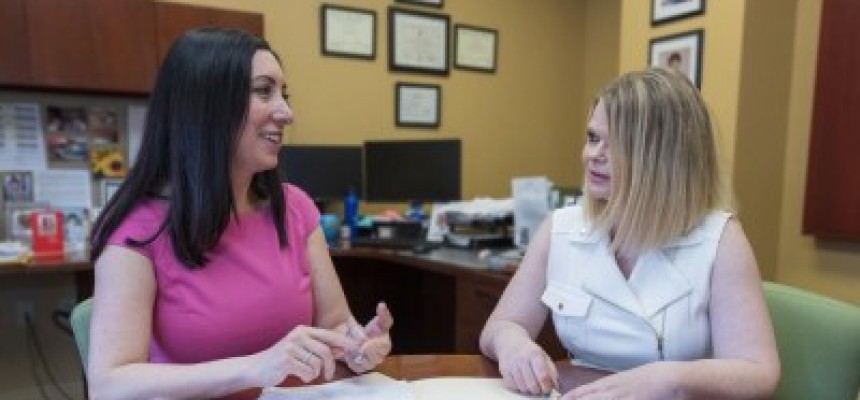
Amanda Putnick Sly, MS, CIP Director of Clinical Trials Office
Amanda Putnick Sly, MS, CIP

Director of Clinical Trials Office
slya@upstate.edu

Jennifer Moore, BS, CCRP Clinical Research Trials Specialist
Jennifer Moore, BS, CCRP

Clinical Research Trials Specialist
2142 Weiskotten Hall
moorej@upstate.edu (315)464-4418

Arianna Tornatore  Director of Clinical Trial Agreements and Systems
Arianna Tornatore

Director of Clinical Trial Agreements and Systems
750 E. Adams Street, 2142A Weiskotten Hall
TornatAr@upstate.edu (315)464-5004

QUESTIONS / COMMENTS
We value your Feedback

Thank you for visiting the research website. Your feedback is valuable to us as we strive to support researchers and provide information about the exciting research conducted at Upstate Medical University.

Go to top